The great popularity – and the dangers – of Secrets
|
<< < > >> |

|
| Most of the Venetian printed production does not partake of the medical or pharmaceutical world, but is the fruit of a few writers who paid more attention to the profitability of their business than to the
health of their readers. The most famous among them is Alessio Piemontese (or Alexius Pedemontanus).
In the 16th century, numerous “books of secrets” flourished across Europe, and compilers immediately took hold of the texts written by their contemporaries. In France, we can give the example of Michel de
Nostredame (1503-1566), aka Nostradamus, who presented under various titles, as if they were his, the Secrets Venetian authors had written. |
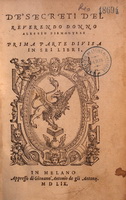
| Girolamo Ruscelli. De' secreti del reverendo Donno Alessio Piemontese. Prima [-terza] parte. Melano: Giovann’ Antonio de gli Antonii, 1559. |
| |
| BIU Santé Pharmacie : cote RES 18694. |
|
|
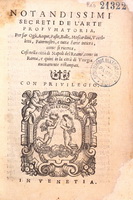
| Giovanni Ventura Rossetto. Notandissimi secreti de l'arte profumatoria... In Venetia: per Francesco Rampazetto, 1555. |
| This document is freely available |
| BIU Santé Pharmacie : cote RES 21322. |
|
|
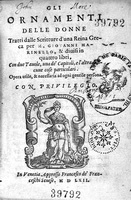
| Giovanni Marinelli. Gli ornamenti delle donne tratti dalle scritture d’una Reina Greca .... Venetia: Francesco de’ Franceschi Senese, 1562. |
| This document is freely available |
| BIU Santé Médecine : cote 39792. |
|
|
|
|
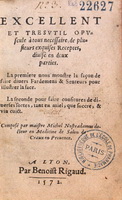
Excellent et très utile opuscule... de plusieurs... receptes, divisé en deux parties: la première nous monstre la façon de faire divers fardemens et senteurs pour illustrer la face; la seconde pour faire confitures... Composé par maistre
Michel Nostradamus ... A Lyon: Benoist Rigaud, 1572. |
| |
| BIU Santé Pharmacie : cote RES 22627. |
|
|
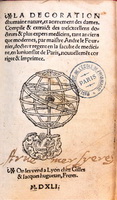
| André Le Fournier. La Décoration d’humaine nature et aornement des dames ... Lyon: Gilles et Jacques Huguetan, 1541. |
| |
| BIU Santé Pharmacie : cote RES 30274. |
|
|
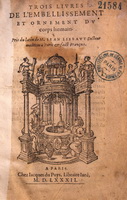
| Jean Liébault. Trois livres de l’embellissement et ornement du corps humain ... Paris: Jacques du Puys, 1582 |
| This document is freely available |
| BIU Santé Médecine : cote 88095. |
|
|
|
These books provide us with invaluable insight on body care in Renaissance Europe. This literature testifies to the harmful effects induced by the lack of precision in the recipes, as well as to the uselessness,
if not the danger, of the materials they recommended using. We are more particularly refer to the use of mercury (quicksilver), lead carbonate (ceruse), arsenic, tin, borax or alum in the production of make-up [1]. |
|


