The Second Empire: a period of fast development
|
<< < > >> |

|
Quantity and quality guaranteed the fast development of the cosmetic industry, notably in France. In 1855, Paris provided the world with bath soap. A lever press was used to cut the soap into bars, and A. Piver
experimented with new enfleurage methods [1]. In 1860, there were in Paris 197 perfumers and 7 soap makers. Steam started being used in factories to heat bains-maries and stills, and also
as a mechanical agent for the presses that extracted the flower-perfumed fats. New essences were imported, and new chemical syntheses were introduced. Machines became prevalent in all types of operations, generating
increased production and improved productivity.
|
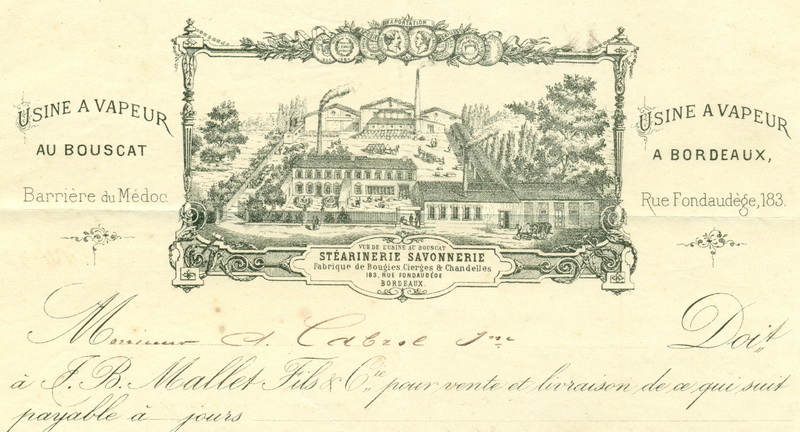
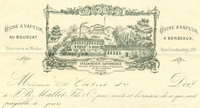
Invoice header with an averall view of the Mallet Fils & Cie steam factory
|
| |
| © Collection privée. |
|
|
|
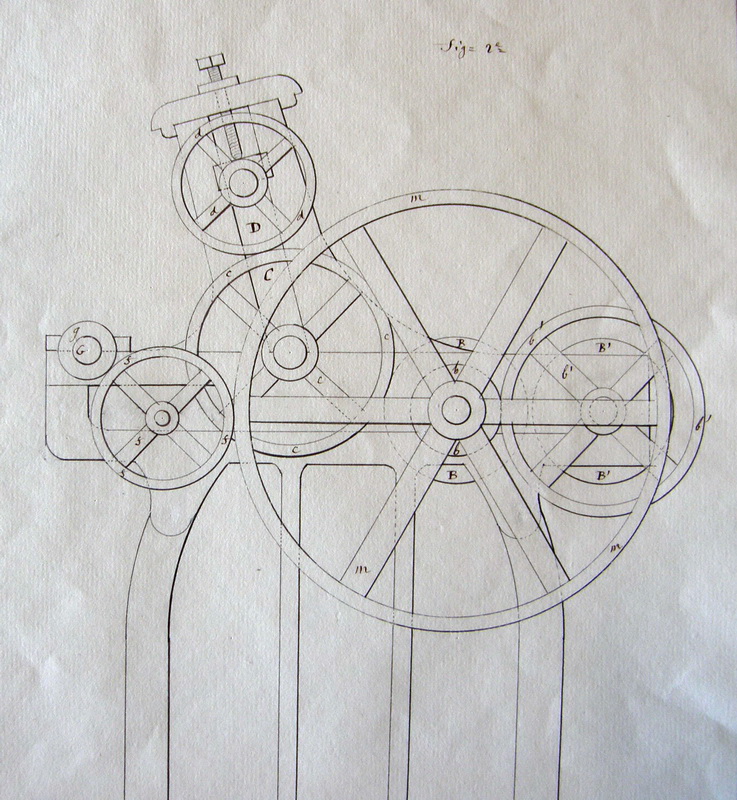
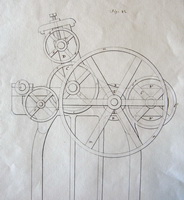
Patent for the invention of a machine dedicated to the soap fabrication, by Lesage (1855).
|
|
Free INPI Database
|
| © Institut national de la propriété industrielle. |
|
|
|
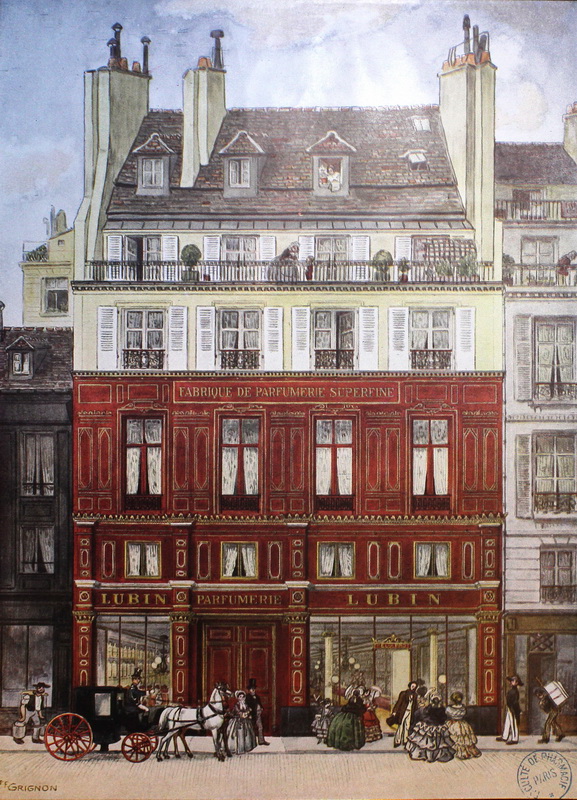
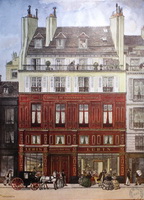
Lubin Perfume House in 1860. La Parfumerie française et l’Art dans la présentation. Paris: La Revue des marques de la parfumerie et de la savonnerie, 1925.
|
|
About Lubin history |
| BIU Santé Pharmacie : cote RES 8536. |
|
|
|
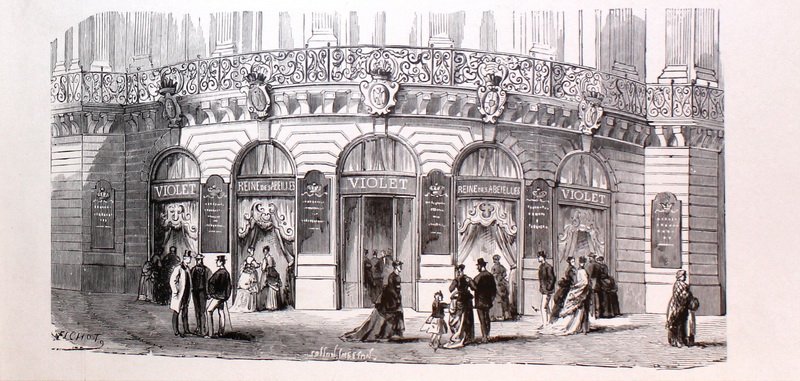
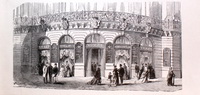
Violet Perfume House in 1868. La Parfumerie française et l’Art dans la présentation. Paris: La Revue des marques de la parfumerie et de la savonnerie, 1925.
|
| |
| BIU Santé Pharmacie : cote RES 8536. |
|
|
|
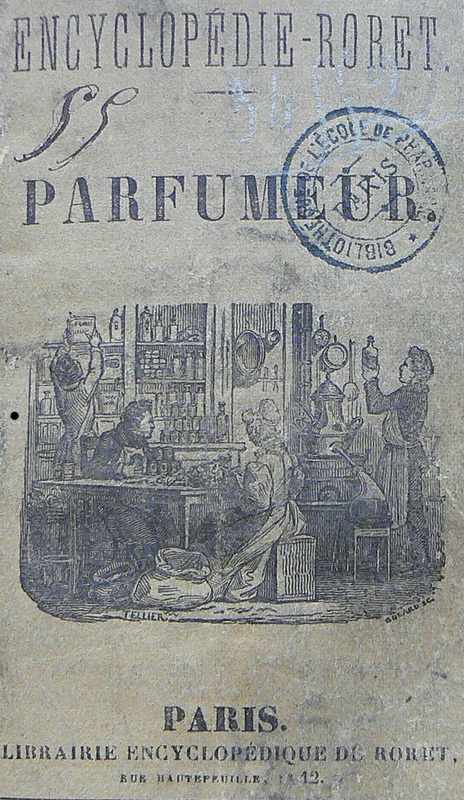
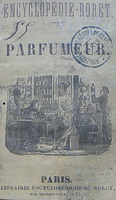
A cosmetic handook. Elisabeth-Félicie Bayle-Mouillard. Nouveau manuel du parfumeur contenant la description des huiles et pommades, poudres absorbantes ou dépilatoires, crèmes et laits cosmétiques, pâtes d’amandes et d’avelines, fards,
dentifrices, eaux de Cologne et de senteur, parfums, pastilles et cassolettes, vinaigres odorants, savons de toilettes … Paris: Roret, 1854.
|
| |
| BIU Santé Pharmacie : cote 34552. |
|
|
|
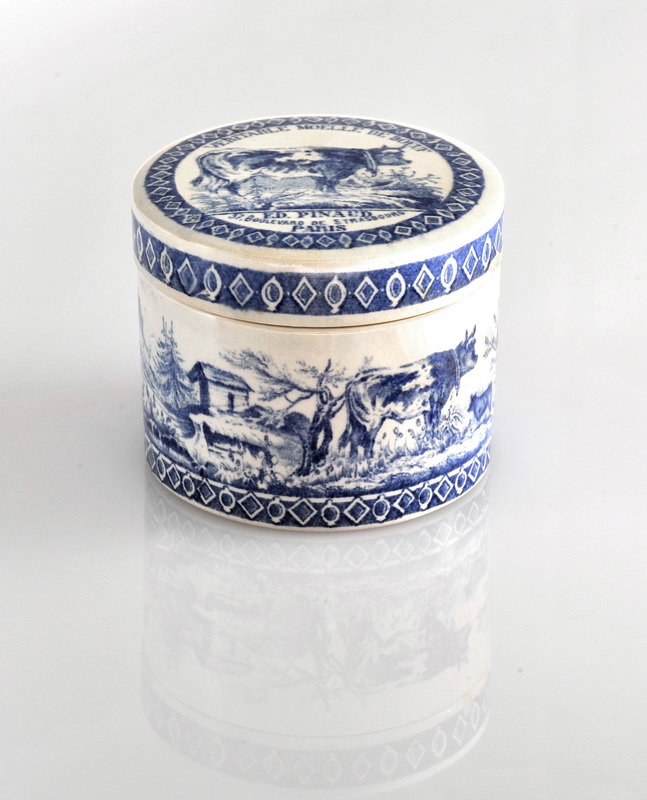
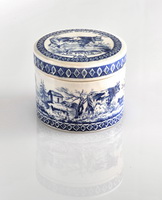
Edouard Pinaud Cream with veritable beaf marrow.
|
| |
| © Collection Privée. |
|
|
|
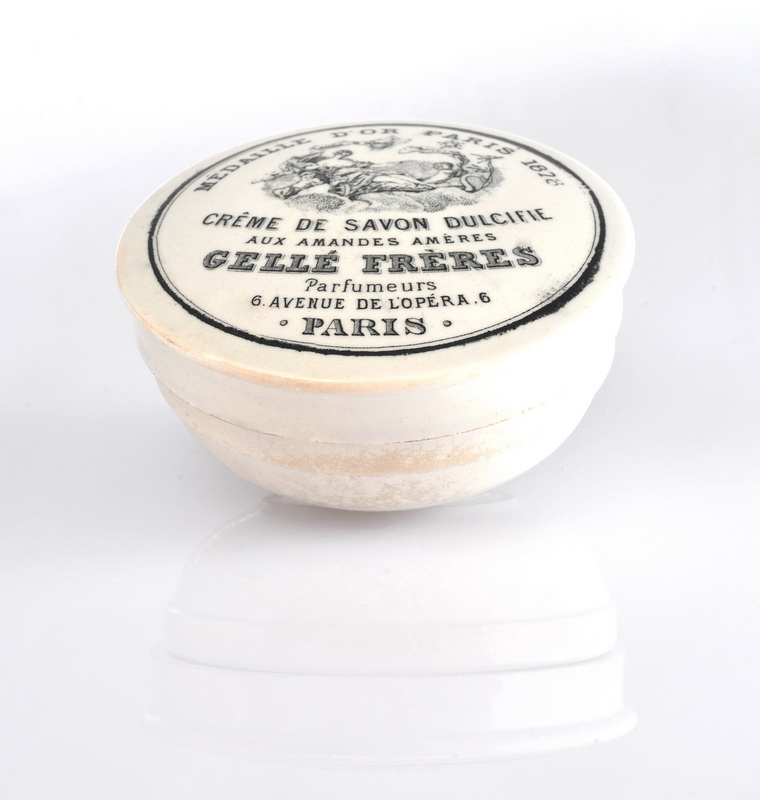
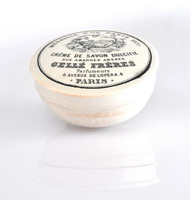
Gellé frères soap cream soften with sweet almond.
|
| |
| © Collection privée. |
|
|
|